ESPN Fantasy Sports
- 4.6
- Rating
- 10.00M
- Installs
- Free
- Price

 Analysis by App-foxy
I installed ESPN Fantasy to see whether it could become a useful part of a sports routine rather than just another app that feels exciting during draft week and forgotten afterward. My impression is that it works best as a central place for people who already play fantasy sports and want a dependable way to follow their teams, make decisions, and keep up with league activity. It is free to download, developed by Disney, and aimed at an Everyone audience, although fantasy sports still require time, attention, and a willingness to make choices throughout a season.
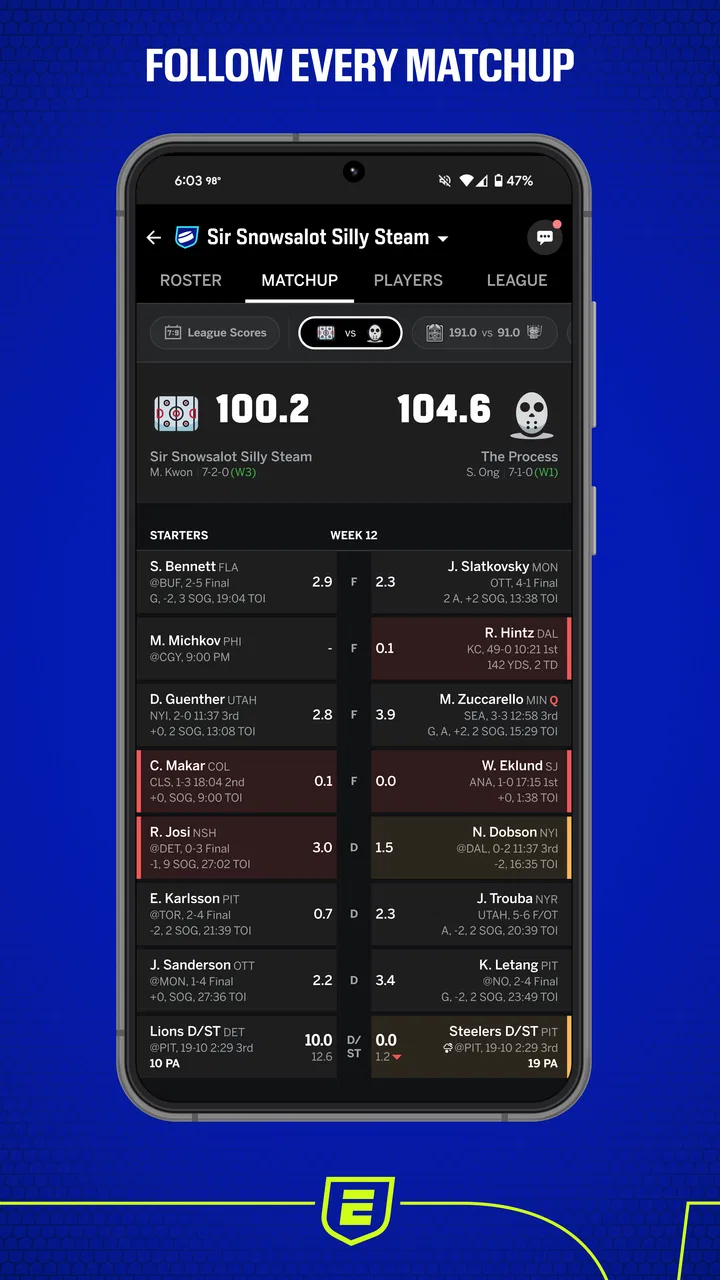
The appeal is easy to understand. Instead of treating each fantasy competition as a separate destination, the app brings the experience into one mobile home. That matters when I want to check a matchup quickly, review a player’s situation, or make a roster decision without sitting at a desktop. ESPN’s own short description is “ESPN Fantasy,” while its broader promise is a single home for fantasy games. In practice, the value comes less from novelty and more from how often the app can remove small bits of friction from following a league.
What the first week feels like
During the first few days, ESPN Fantasy feels most useful when I approach it as a control panel rather than a news app. The important question is not whether I can endlessly browse, but whether I can open the app and understand what needs attention. A fantasy manager usually wants to know the state of a matchup, whether a lineup needs changing, and whether a decision is waiting. The app’s sports-focused design makes that kind of check feel more natural than searching through a general sports application.
You May Also Like

 AccuWeather: Weather Radar
AccuWeather Review: A Quick, Clear Forecast for Everyday Decisions
For everyday plans, the best forecast is the one you can understand quickly. AccuWeather makes rain timing, radar, and local conditions easy to act on, with a few trade-offs.

 Hill Climb Racing
Why Hill Climb Racing Still Turns Crashes Into One More Run
A tiny car, a bumpy hill and one more upgrade: Hill Climb Racing keeps resurfacing because its simple chaos makes every near-miss feel personal.

 AliExpress - Shopping App
AliExpress Makes Global Shopping Feel Personal, but Shoppers Bear the Risk
AliExpress turns a global marketplace into a pocket-sized discovery engine. Its reach is useful, its shopping loop compelling, and its trade-offs easy to miss.

 Lords Mobile: Kingdom Wars
Lords Mobile Is a Kingdom-Building Routine, Not a Quick Match
A case-by-case verdict on the building, battles, device demands, and social commitments that make Lords Mobile rewarding for some players and exhausting for others.

 PDF Scanner app - TapScanner
TapScanner Makes Paperwork Easier to Capture, Check, and Share
TapScanner makes scanning with a phone feel less like a rescue operation and more like a dependable step in getting work done. Its capture tools are useful, though not flawless.

 Block Blast!
 Shows How Much a Puzzle Game Can Leave Out
A quiet grid game shows why puzzle players increasingly value instant clarity, repeatable skill and low-pressure play—and where the genre still needs to catch up.
More From Our News Desk
View All News


The strongest early use case is the busy day. Imagine checking your fantasy team during a commute, between meetings, or while watching a game at home. You may not have time to study every option, but you can still review your active roster and decide whether something deserves attention. That quick-check behavior is where a mobile fantasy app earns its place. It turns management into a short habit instead of requiring a full session at a computer.
I also found that the app makes more sense when several fantasy activities are already part of my sports life. If I only join one casual league and rarely adjust anything, the benefit is smaller. If I follow multiple competitions or want one familiar place to return to, the centralized approach becomes more convincing. The first-week excitement comes from having immediate access, but the real test is whether that access remains useful once the draft atmosphere and opening-week enthusiasm disappear.
One practical tip is to decide in advance what your normal check-in routine will be. I would look at the app at the same times I already follow sports, such as before a game day begins and again when a matchup changes significantly. Without a routine, fantasy apps can become noisy reminders that encourage impulsive decisions. With a routine, ESPN Fantasy is easier to use as a planning tool.
The onboarding experience is also shaped by the league itself. A fantasy app cannot make an inactive league feel lively, and it cannot replace agreement among friends about how seriously everyone wants to play. ESPN Fantasy is therefore most enjoyable when the competition around it is healthy. If your league has clear participation and regular conversation, the app supports that energy. If nobody sets lineups or responds to activity, the app may feel empty even though the software is available.
Useful decisions instead of constant browsing
Fantasy management rewards selective attention. I would not recommend opening ESPN Fantasy with the expectation that it will tell me exactly what to do every time. The better approach is to use it to organize decisions, then apply judgment. A player’s recent performance can be tempting, but a short streak is not automatically a reason to change a lineup. The app is a place to act; it is not a substitute for understanding the rules and scoring system of your league.
This distinction is important for new managers. The interface can make roster changes feel simple, but the consequences still depend on league settings, available players, and timing. Before making frequent moves, I would learn how the particular competition handles positions, scoring, and deadlines. That small investment prevents the common mistake of treating every visible option as equally valuable.
Another useful habit is to separate “must check” information from “interesting” information. I would first review roster status and matchup needs, then explore other details only if I have time. This keeps the app from turning a five-minute check into an hour of scrolling. It also protects the enjoyment of fantasy sports: the goal is to add interest to watching games, not make every spare moment feel like administrative work.
Why it can keep earning space month after month
After the first month, the question changes from “Is this convenient?” to “Does it help me manage a season consistently?” ESPN Fantasy has lasting value when I use it as a recurring dashboard. The app is not dependent on one dramatic feature. Its usefulness comes from repeated small actions: checking a matchup, adjusting a roster, monitoring league movement, and returning to the same place when sports activity picks up.
That recurring pattern is especially helpful for people who dislike managing fantasy sports from a browser. A phone is usually nearby, and a focused mobile interface can make the difference between remembering a decision and missing it. I appreciate that the app fits short sessions. I do not need to reserve an entire evening simply to stay involved, although serious managers will still need more analysis than the app alone can provide.
ESPN Fantasy also suits a mixed level of commitment. A casual player can use it for occasional lineup checks, while a more engaged manager can return more often and make the league part of a daily sports routine. The important limitation is that the app cannot create strategic depth by itself. If you want extensive research, detailed projections, or a highly specialized analysis workflow, you may prefer to combine it with other sports resources. That is not a failure of the app; it is a reminder that a league-management tool and a full research setup are different things.
Its broad adoption helps explain why it can be a practical choice for established leagues. The app has a 4.7 average from around 394 thousand ratings, with more than 10 million installs. Those figures do not guarantee that every manager will love the experience, but they suggest that ESPN Fantasy has become a familiar option rather than a niche experiment. Familiarity matters when a league is trying to get everyone into the same place, especially when not every participant wants to learn an unfamiliar platform.
For a league organizer, the central question is reliability of participation. I would recommend agreeing on a simple weekly rhythm: when managers check their teams, how the group discusses questionable players, and what happens when somebody forgets a decision. The app can support that rhythm, but it cannot enforce good league etiquette. In a friends’ league, that social agreement often contributes more to long-term enjoyment than any individual screen.
Where the recurring value becomes weaker
The app is less compelling if your fantasy interest is temporary. Someone who joins a league because friends insisted, then never wants to make decisions, may find the notifications and reminders more irritating than useful. Likewise, people who follow sports casually but do not enjoy comparing players or managing a roster may be better served by a regular sports news app.
I would also hesitate to recommend it as the only tool for someone who manages fantasy sports with a highly analytical process. ESPN Fantasy gives you the practical home for your teams, but advanced managers may want spreadsheets, specialist research, or another service for deeper evaluation. Using several tools can improve decision-making, though it also increases maintenance. The right choice depends on whether convenience or maximum analysis matters more to you.
There is another trade-off in the all-in-one approach. Bringing multiple fantasy activities together is convenient, but it can also make the app feel busy when I only want to check one team. The more competitions I follow, the more important it becomes to develop a personal order of operations. I would start with active matchups, then move to roster decisions, and leave lower-priority browsing for later. That simple sequence keeps the central dashboard from becoming a source of distraction.
The maintenance burden behind the convenience
Fantasy sports always involve maintenance, and ESPN Fantasy does not remove that responsibility. The app can make the work accessible, but I still have to remember to check my team and understand what each decision means. This is manageable when fantasy is part of my normal sports schedule. It becomes tiring when I join too many leagues or try to monitor every possible development.
The main burden is not opening the app; it is deciding how much attention is enough. A manager can spend a few minutes checking obvious needs, or become trapped in repeated second-guessing. I found the healthier approach is to set a limit for routine checks. If there is no meaningful roster decision, I can close the app instead of searching for one. That keeps the experience from taking over the sports I originally opened it to enjoy.
New users should also expect a learning curve around league-specific rules. The app may present roster actions clearly, but clarity of buttons is not the same as clarity of strategy. Before using the service seriously, I would read the league settings and learn what counts in scoring. This is one of the most important practical tips because a polished interface can create false confidence. Knowing the rules prevents avoidable moves and makes the app feel more predictable.
Storage and device compatibility are worth considering as well. The current version is 9.8.0 and requires Android 6.0 or later. That makes it accessible to many existing devices, but anyone using an older phone should check compatibility before planning around it. On a supported device, I would still keep the app updated when convenient, since fantasy tools depend on timely information and stable access during active sports periods.
The free price makes trying ESPN Fantasy straightforward, but the presence of in-app purchases ranging from $4.99 to $129.99 per item means I would pay attention during setup and use. The free entry point is attractive for casual managers, yet users should understand that “free” does not mean every possible option or purchase prompt will feel irrelevant to them. I would avoid spending impulsively just because a fantasy decision feels urgent. A good rule is to decide beforehand whether any optional purchase genuinely improves the way you play.
For families, the Everyone age rating makes the app broadly approachable, but fantasy sports still work best when younger users have help understanding competition, spending, and league rules. The age label describes the app’s content audience; it does not turn fantasy management into a risk-free activity. I would treat purchases and league participation as separate choices that deserve adult judgment where appropriate.
How to reduce fatigue during a long season
Fatigue usually begins when every update feels equally important. To avoid that, I would create a short checklist: confirm the lineup, review obvious absences or changes, check the matchup, and stop. This is more sustainable than repeatedly refreshing the app. The goal is consistency, not constant vigilance.
Another useful tactic is to keep the number of active leagues realistic. ESPN Fantasy can serve as a single home for fantasy games, but centralization can encourage overcommitment because adding another league feels easy. The hidden cost is not installation or navigation; it is the extra decisions each league creates. If I cannot give a league regular attention, I would rather participate in fewer competitions and enjoy them more.
I also recommend separating emotional watching from roster management. It is natural to react to a player’s big performance, but changing a team immediately after every exciting result can make the season feel exhausting. I would use the app to record a decision, then return to watching the sport. That balance preserves the social and entertainment side of fantasy instead of turning every game into a judgment about my management.
How it compares with the usual alternatives
Compared with managing fantasy sports through a mobile browser, ESPN Fantasy feels more natural for repeated use. A dedicated app is easier to reach during a quick check, and the experience is built around the fantasy task rather than a general website. If your main alternative is opening a browser, typing a site address, and navigating each time, the app’s convenience is a meaningful advantage.
Compared with a general sports app, ESPN Fantasy is more focused on participation. A news application may be better for scores, headlines, and broad coverage, while this app makes more sense when I need to manage a team. I would not replace a complete sports-news routine with it, but I would use it alongside one if fantasy decisions are part of how I follow games.
Compared with specialist fantasy platforms, the decision is more nuanced. A specialist service may suit managers who prioritize deep analysis, unusual league formats, or a very customized workflow. ESPN Fantasy is the better fit when shared familiarity, straightforward access, and a central home matter more than building an elaborate research system. For a casual or moderately engaged league, that simplicity can be a strength. For a manager who treats fantasy as a serious analytical hobby, it may feel like only one part of the setup.
The most important comparison is therefore not which app has the longest feature list. It is which service your entire league will actually use. A theoretically powerful platform is less useful if half the managers avoid it. ESPN Fantasy earns points here because a recognizable sports brand and a large installed base can lower the social barrier to participation. Still, I would ask league members what they value before switching platforms, especially if everyone already has a workable routine elsewhere.
My long-term verdict after the novelty fades
ESPN Fantasy earns lasting space on my phone when I treat it as a lightweight seasonal habit. Its best quality is not that it makes fantasy sports effortless; it makes the necessary parts easy to reach. I can use it for quick decisions, regular matchup checks, and keeping several fantasy activities in one place. That recurring usefulness is enough for me to recommend it to friends who already enjoy managing leagues.
I would skip it if I do not want ongoing responsibility, if my league is inactive, or if I am searching for a complete advanced-analysis environment in one app. The free download is a sensible way to try it, but the long-term value depends on participation rather than installation. If I only open it during the draft and ignore it afterward, the app will not create value on its own.
Disney’s app has been available since Jul 14, 2014, and its current version is 9.8.0. That long presence gives it the feel of an established fantasy destination, while the broad rating and install figures show that it is already part of many managers’ routines. I would still judge it by my own league’s needs instead of assuming popularity guarantees a perfect fit.
My final recommendation is simple: use ESPN Fantasy if you want a familiar, mobile-first way to stay involved without building a complicated system. Set a check-in routine, learn your league rules, keep purchases deliberate, and resist the urge to monitor every moment. The app earns its place through sustainable use, not constant attention. For me, that makes it a strong choice for casual and committed managers alike, provided they want the responsibility that comes with fantasy sports rather than only the excitement of the opening week.
FAQs for ESPN Fantasy Sports
01What sports can I play on ESPN Fantasy Sports?
ESPN Fantasy Sports offers a wide range of popular sports for fantasy play, including football, basketball, baseball, and hockey. Users can join public leagues, create custom leagues, or participate in daily fantasy games. The app frequently updates to include seasonal and special event sports, ensuring a diverse gaming experience.
02Is ESPN Fantasy Sports free to use?
Yes, ESPN Fantasy Sports is free to download and play. Users can access most features without any cost, including joining leagues and drafting teams. However, the app may offer premium features or subscriptions that provide enhanced tools and insights for a fee, which some users may find beneficial.
03Can I play with my friends on ESPN Fantasy Sports?
Absolutely! ESPN Fantasy Sports allows you to create custom leagues with friends, family, or colleagues. You can set up your league rules, invite players via email or social media, and enjoy a personalized fantasy experience. It's a great way to add some friendly competition to your sports watching.
04How does the scoring system work in ESPN Fantasy Sports?
The scoring system in ESPN Fantasy Sports varies depending on the sport and league settings. Each sport has its own standard scoring rules, but league commissioners can often customize these settings. The app provides detailed explanations of scoring mechanisms, ensuring you understand how players earn points throughout the season.
05Is ESPN Fantasy Sports available on both Android and iOS?
Yes, ESPN Fantasy Sports is available on both Android and iOS platforms. Users can download the app from the Google Play Store or Apple App Store. It offers a seamless experience across devices, allowing you to manage your teams and leagues from your smartphone or tablet, ensuring you never miss a moment of the action.
Pros
- User-friendly interface for easy navigation.
- Wide range of sports and leagues available.
- Real-time updates and live scoring feature.
- Customizable teams and leagues for personalization.
- Comprehensive player stats and analysis.
Cons
- Occasional app crashes and bugs reported.
- Ads can be intrusive during usage.
- Limited offline functionality available.
- Some features require in-app purchases.
- High data usage for live updates.

ESPN Fantasy Sports
Gallery